
Skin is the body’s largest organ, it covers the body and protects it from injury, temperature and dehydration.
There are 3 main types of cells in the top layer of the skin (called the epidermis) seen below:
- Squamous cells: These are flat cells in the outer part of the epidermis that are constantly shed as new ones form.
- Basal cells: These cells are in the lower part of the epidermis, called the basal cell layer. These cells constantly divide to form new cells to replace the squamous cells that wear off the skin’s surface. As these cells move up in the epidermis, they get flatter, eventually becoming squamous cells.
- Melanocytes: These cells make the brown pigment called melanin, which gives the skin its tan or brown colour. Melanin acts as the body’s natural sunscreen, protecting the deeper layers of the skin from some of the harmful effects of the sun. For most people, when skin is exposed to the sun, melanocytes make more of the pigment, causing the skin to tan or darken.
Normal Skin Anatomy Skin Cancer Invasion

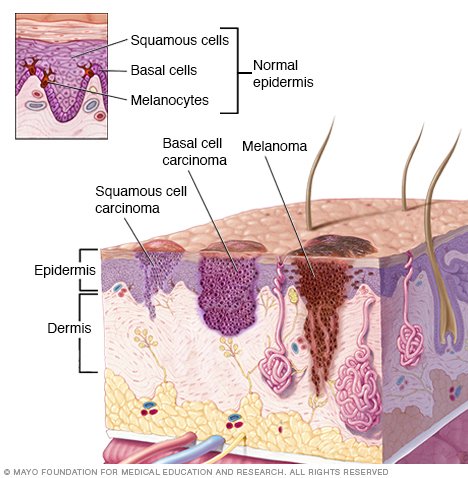
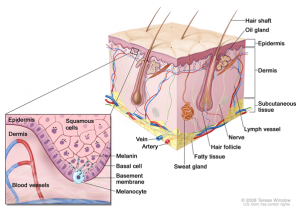
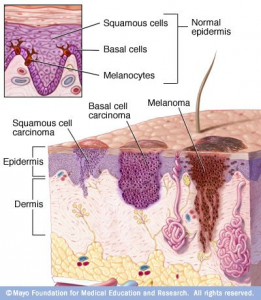
Skin cancer begins when cells in the skin start to grow uncontrollably. The epidermis is separated from the deeper layers of skin by the basement membrane. When a skin cancer becomes more advanced, it generally grows through this barrier and into the deeper layers.
Basal cell carcinoma
This the most common type of skin cancer. About 8 out of 10 skin cancers are basal cell carcinomas (also called basal cell cancers). When seen under a microscope, the cells in these cancers look like cells in the lowest layer of the epidermis, called the basal cell layer. These cancers usually develop on sun-exposed areas, especially the head and neck. These cancers tend to grow slowly. It’s very rare for a basal cell cancer to spread to other parts of the body. But if a basal cell cancer is left untreated, it can grow into nearby areas and invade the bone or other tissues beneath the skin. If not removed completely, basal cell carcinoma can recur (come back) in the same place on the skin. People who have had basal cell skin cancers are also more likely to get new ones in other places.
Squamous cell carcinoma
About 2 out of 10 skin cancers are squamous cell carcinomas (also called squamous cell cancers). The cells in these cancers look like abnormal versions of the squamous cells seen in the outer layers of the skin. These cancers commonly appear on sun-exposed areas of the body such as the face, ears, neck, lips, and backs of the hands. They can also develop in scars or chronic skin sores elsewhere. They sometimes start in actinic keratoses (described below). Less often, they form in the skin of the genital area. Squamous cell cancers are more likely to grow into deeper layers of skin and spread to other parts of the body than basal cell cancers, although this is still uncommon.
Keratoacanthomas
are dome-shaped tumors that are found on sun-exposed skin. They may start out growing quickly, but their growth usually slows down. Many keratoacanthomas shrink or even go away on their own over time without any treatment. But some continue to grow, and a few may even spread to other parts of the body. Their growth is often hard to predict, so many skin cancer experts consider them a type of squamous cell skin cancer and treat them as such.
Melanoma
These cancers develop from melanocytes, the pigment-making cells of the skin. Melanocytes can also form benign (non-cancerous) growths called moles. Melanomas are much less common than basal and squamous cell cancers, but they are more likely to grow and spread if left untreated.
https://www.cancer.org